Man Mo Temple or Tin Hau Temple? Which to Visit, and How to Behave Inside
Short answer: Man Mo Temple is the famous one — on Hollywood Road in Sheung Wan, built between 1847 and 1862, a declared monument since 2010, and the temple to choose if you want one temple and you are on Hong Kong Island. The Tin Hau Temple at Lei Yue Mun is the older of the two, founded around 1753, and it is a fishing village's working temple rather than an attraction on a city street: it makes sense if your day is already the village. Both are active places of worship, neither publishes a dress code, and photography is the one thing worth asking about before you start.
At a glance
Man Mo Temple — Hollywood Road, Sheung Wan, Hong Kong Island. Built between 1847 and 1862; honours Man Cheong (God of Literature) and Mo Tai (God of Martial Arts); declared a monument in 2010; managed by Tung Wah since 1908. Hours published by the operator: 8 a.m. to 6 p.m.
Tin Hau Temple, Lei Yue Mun — Ma Wan Tsuen, in the village, Kowloon. Founded around 1753; honours Tin Hau, the deity the fishing community worships for protection from storms; rated a Grade 3 historic building in 2010. No opening hours are published by the temple.
The choice — one temple on Hong Kong Island: Man Mo. The temple inside the fishing village you are already visiting: Lei Yue Mun.
Two temples, two purposes
| Factor | Man Mo Temple | Tin Hau Temple, Lei Yue Mun |
|---|---|---|
| Where | 124-126 Hollywood Road, Sheung Wan, on Hong Kong Island — the monument record gives the compound as 124-126, 128 and 130 | Ma Wan Tsuen, in the village of Lei Yue Mun, Kowloon, on the channel side |
| Built | Between 1847 and 1862, by wealthy Chinese merchants | Around 1753, the 18th year of the Qianlong reign, according to the inscription on its granite stele; completely reconstructed in 1953, when the Hip Tin Temple was added |
| Who it honours | Man Cheong, God of Literature, and Mo Tai — Kwan Tai — God of Martial Arts. The compound also holds Lit Shing Kung, for the worship of all heavenly gods, and Kung Sor, an assembly hall | Tin Hau, the Empress of Heaven. Villagers worship here because the temple is believed to protect the fishermen from storms. The compound also holds the Hip Tin Temple |
| Setting | A city temple on the Hollywood Road hillside; three blocks, declared a monument in 2010 | A village temple on a working waterfront: two halls around a courtyard, concrete walls and green glazed-tile pitched roofs, with two antique cannons under the boulders in front |
| Opening hours | 8 a.m. to 6 p.m.; 7 a.m. to 6 p.m. on the 1st and 15th of each lunar month and on the operator's listed festival days. The operator, Tung Wah, publishes these | Not published by the temple. It is typically open in the daytime |
| When to go | The operator opens an hour earlier on the 1st and 15th of each lunar month and on festival days. The Autumn Sacrificial Rites have been held here annually since 1957 | Tin Hau Festival, on the 23rd day of the third lunar month, when the village runs Cantonese opera over four days and five nights around the birthday |
| What it costs | No admission price is published for the temple, and none for the coil incense, lanterns and wishing ribbons the operator offers to worshippers | No admission price is published by the temple |
| Etiquette | No dress code is published — see the etiquette section below | No dress code is published — see the etiquette section below |
Tin Hau Temple, Lei Yue Mun: the village's own temple
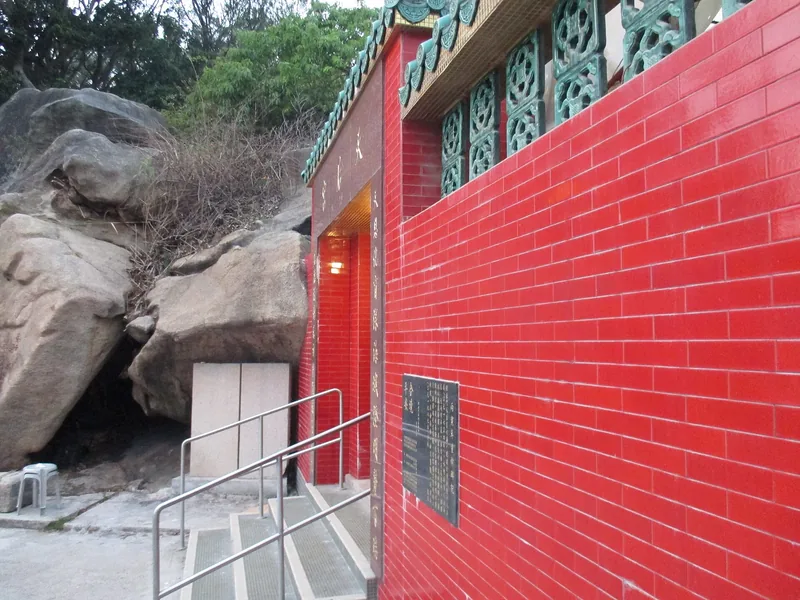
Lei Yue Mun's temple stands in the village at Ma Wan Tsuen, and its full name is the Tin Hau Holy Temple. It is a compound of two temples: Tin Hau Temple itself and the Hip Tin Temple, added when the building was completely reconstructed in 1953. It is built on a two-hall-one-courtyard plan, with concrete walls and green glazed-tile pitched roofs, and two antique cannons still stand under the boulders in front of it, believed to have been made to guard the Lei Yue Mun Channel.
The foundation is dated by the inscription on its granite stele: around 1753, the 18th year of the Qianlong reign of the Qing dynasty. Credit for founding it is given to a Qing pirate, Zheng Lian-chang, a descendant of a subordinate of the Ming loyalist Zheng Cheng-gong. If the stele holds, that makes this temple older than Man Mo Temple, which is dated between 1847 and 1862. The Antiquities Advisory Board rated it a Grade 3 historic building in 2010.
It is worth knowing why it was built. Tin Hau is the deity the fishing community turns to for protection at sea, and the temple's own account is exactly that: villagers worship here because the building of a Tin Hau temple was believed to protect the fishermen from storms. Once a year the belief takes the form of a festival. Tin Hau's birthday falls on the 23rd day of the third lunar month, and Lei Yue Mun marks it with a Cantonese opera run over four days and five nights around the birthday.
The lighthouse marks the same channel
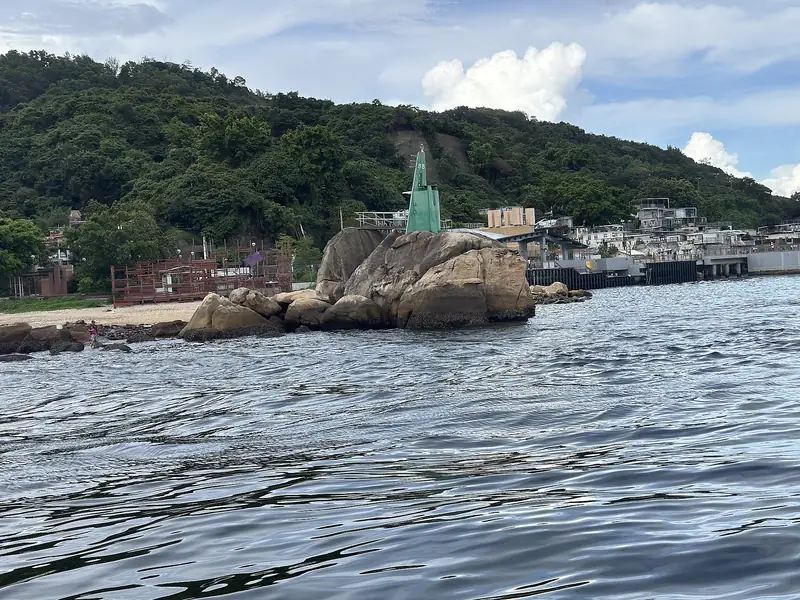
The village's other landmark tells the same story in stone. Lei Yue Mun's lighthouse is Beacon No. 88: established in 1902, unlit for its first two decades, fitted with navigation lights in 1924, and rebuilt in the form you see now in 1964. It stands on the nearshore reefs and can be reached on foot at low tide. One is a prayer for the boats; the other is a light to bring them home.
Man Mo Temple, Sheung Wan: the city's temple
Man Mo Temple stands on Hollywood Road at 124-126, in Sheung Wan on Hong Kong Island. It was built between 1847 and 1862 by wealthy Chinese merchants, primarily for the worship of Man Cheong, the God of Literature, and Mo Tai — better known as Kwan Tai — the God of Martial Arts. What visitors often miss until they are inside is that it is a compound of three blocks: the temple, Lit Shing Kung, for the worship of all heavenly gods, and Kung Sor, which served as an assembly hall.
Tung Wah Hospital took the temple over in 1908 under the Man Mo Temple Ordinance, and it has managed it ever since. In 2010 it was declared a monument. The Autumn Sacrificial Rites have been organised here annually since 1957, and entered the Intangible Cultural Heritage Inventory of Hong Kong in 2014, as the operator records.
The contents repay a slow look. The Hong Kong Tourism Board lists a Qing-dynasty bronze bell, which it dates to 1847, and a sedan chair it dates to 1862 — those two years are the tourism board's, not the operator's, which lists the same items without dates. Alongside them the operator lists its own divine teakwood sedan, plaque, and divine bell and drum, and it offers coil incense, lanterns and wishing ribbons to worshippers, with no price published for any of them.
Opening hours are the operator's own: 8 a.m. to 6 p.m., extended to 7 a.m. to 6 p.m. on the 1st and 15th of each lunar month and on its listed festival days. Tung Wah's temple-services line is 2803 2916.
Temple etiquette: dress, photography, incense and cost
Most of what circulates online as Hong Kong temple etiquette is not published by any temple. What follows is the published position, source by source, and it is thinner than the blog posts suggest.
Dress
No temple on this page publishes a dress code — not Man Mo, not the Lei Yue Mun Tin Hau Temple — and none appears on the government pages for either. The only dress wording published by a temple operator is Sik Sik Yuen's, for Wong Tai Sin Temple, and it is brief: worshippers are asked to be "neatly dressed and worship with sincerity", and to "be patient and do not rush". The rules you will find elsewhere — shoulders and knees must be covered, no tank tops, left foot first, walk clockwise, no flash — are not published by any temple operator or government source.
Photography
Photography is the one area with a published rule, and its scope matters. The Chinese Temples Committee, a statutory body, states that apart from use for private collections, photographing or filming at temples under its management requires prior application and approval. Its filming terms add that the temple's name may not be filmed without written consent, that close-up shots of the deity statues are not permitted, and that no blasphemous, obscene, violent or disrespectful conduct is allowed; commercial filming attracts an administrative fee of HK$1,000 per hour, minimum HK$5,000, and a service fee of HK$100 per hour, minimum HK$500, and the applicant must carry public-liability insurance of at least HK$10 million.
That rule is the Committee's and it covers the Committee's temples. Man Mo Temple is managed by Tung Wah, and the Lei Yue Mun Tin Hau Temple is not Committee-managed, so it is not their house rule. What it does tell you is how Hong Kong treats temple photography: as something you ask about rather than assume.
Incense and offerings
The published practice for offerings comes from Wong Tai Sin, where the operator, Sik Sik Yuen, sets it out in its own FAQ: worshippers bring nine incense sticks and offer them at the temple's three incense points; joss candles, cooking oil and large incense bundles are not allowed; the temple keeps no worship items, so worshippers bring their own; and fresh flowers are encouraged as an offering. At Man Mo Temple, the tourism board describes visitors offering joss paper, incense sticks, vegetables and symbolic round fruits such as oranges. These are two different temples' customs, so keep them apart: Wong Tai Sin's nine-stick practice is Sik Sik Yuen's, not Man Mo's and not the village temple's.
What it costs
Worship at Wong Tai Sin is free — Sik Sik Yuen states that the temple is open to the public and free of charge, and that donations are how its work is funded — and it publishes the only fee schedule of the three temples here: admission to the Taisui Yuanchen Hall is HK$100 per adult, half price for people aged 65 or over and for people with disabilities, and submitting a prayer there costs HK$300. Neither Man Mo Temple nor the Lei Yue Mun Tin Hau Temple publishes an admission price or a tariff, and Man Mo's coil incense, lanterns and wishing ribbons are offered with no price published. If you want a figure to plan with at either of those two temples, the honest position is that none is published.
Noise and conduct
The one conduct standard published by a statutory body is the Committee's: no blasphemous, obscene, violent or disrespectful conduct at its temples. Beyond that, the published ask is the single line from Sik Sik Yuen — be patient, do not rush. Both temples on this page are active places of worship rather than museums, and the practical version of all of it is ordinary courtesy: keep your voice down, step aside for people praying, and save the conversation for outside the halls.
Which one, or both?
Choose Man Mo Temple if…
You want one temple, and you are on Hong Kong Island. It is a monument and a compound of three blocks on Hollywood Road in Sheung Wan, it carries the literature-and-martial-gods story, and its institutional history runs from 1847-1862 through the 1908 ordinance to the 2010 declaration. It is also the easier of the two to fold into a day in central Hong Kong.
Choose the Lei Yue Mun Tin Hau Temple if…
You are going to the village anyway, or you want a temple that is still doing the job it was built for. It is the older of the two — around 1753 against 1847-1862 — it belongs to a fishing community rather than a city street, and the day around it is a fuller trip than the temple alone: the seafood street, the channel, and the lighthouse out on its reefs.
Doing both
Both in one day is possible; they are simply not neighbours, and you cross the harbour between them. Man Mo Temple is on Hollywood Road in Sheung Wan, on Hong Kong Island. The village temple is on the Kowloon side at Lei Yue Mun: MTR Yau Tong, Exit A2, on the Kwun Tong and Tseung Kwan O lines, then a walk of about 15 minutes along Cha Kwo Ling Road to Lei Yue Mun Path, which runs through the village.
What if it rains?
Less than you would expect. Man Mo Temple is a compound of three roofed blocks, and the village temple is built on a two-hall-one-courtyard plan under green glazed-tile roofs, so in both cases the weather costs you the walk between things rather than the visit itself. If the walk is the point — the village street, the channel, the lighthouse on its reefs at low tide — then a wet day is the wrong day for that half.
Related guides
Tin Hau Temple, Lei Yue Mun — the village temple in full, with its history and photographs
Tin Hau Festival guide — the 23rd day of the third lunar month, and the opera run around it
Lighthouse and Tin Hau Temple historic attractions — the channel's two markers and the village's other historic attractions
Getting here — MTR, ferry, bus and taxi routes to the village
What to do in Lei Yue Mun — the full day around the temple